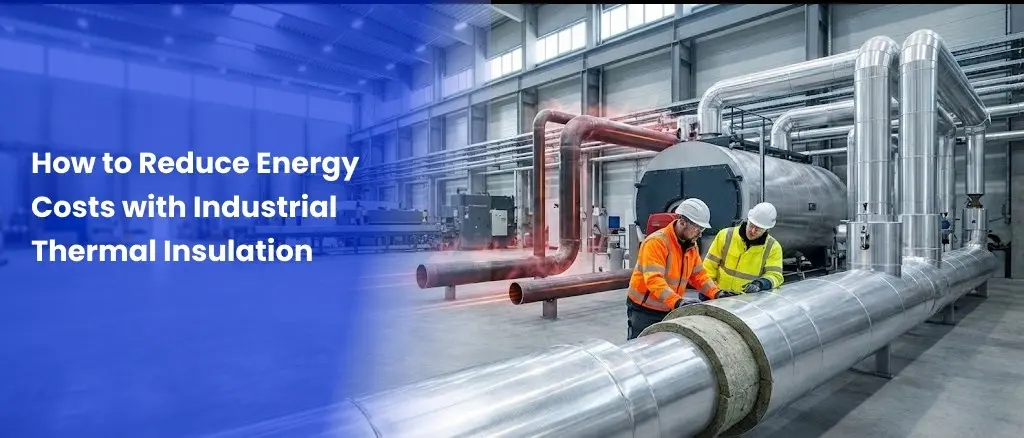
Energy efficiency is no longer optional for industrial facilities. With rising electricity tariffs, increasing fuel costs, and stricter sustainability regulations across India, energy loss through uninsulated or poorly insulated systems directly impacts operational profitability. In manufacturing plants, pharmaceutical units, warehouses, food processing facilities, power plants, and commercial buildings, uncontrolled heat transfer remains one of the most overlooked yet financially significant inefficiencies.
Industrial thermal insulation offers a proven engineering solution to reduce heat loss, stabilize operating temperatures, protect critical assets, and significantly lower overall energy consumption. When properly designed and professionally executed, insulation systems deliver measurable operational, financial, and safety benefits.
Understanding Industrial Thermal Insulation
Industrial thermal insulation refers to the systematic application of engineered insulation materials to pipelines, vessels, ducts, tanks, boilers, and structural components to control heat transfer. Unlike conventional building insulation, industrial insulation is designed based on precise thermal calculations, operating conditions, and environmental exposure.
Its purpose extends beyond temperature control. A well-designed insulation system contributes to:
-
Process energy conservation
-
Reduced fuel and electricity usage
-
Equipment protection
-
Worker safety
-
Moisture control
-
Corrosion prevention
-
Regulatory compliance
Each insulation project must consider operating temperature ranges, ambient conditions, humidity levels, system geometry, mechanical stress factors, and long-term maintenance requirements.
Engineering Principles of Thermal Insulation
Thermal insulation works by minimizing three fundamental modes of heat transfer:
Conduction
Conduction is the transfer of heat through solid materials. In industrial environments, metal pipelines and vessels act as strong heat conductors. Insulation materials with low thermal conductivity values reduce the rate at which heat travels through these surfaces, preserving process temperatures.
Convection
Convection occurs when heat is transferred through moving fluids such as air or liquid. Insulation reduces surface temperature differences that drive convective heat movement, helping maintain stable operating conditions.
Radiation
Radiant heat is emitted from high-temperature surfaces in the form of infrared energy. Insulation systems, especially when combined with protective cladding, significantly reduce radiant heat emission into the surrounding environment.
Effective insulation design requires:
-
Detailed heat-loss calculations
-
Thermal conductivity analysis at operating temperatures
-
Thickness optimization
-
Mechanical strength evaluation
-
Vapor barrier engineering
-
Proper cladding and weather protection
Without proper engineering, insulation performance may fall short of expected energy-saving outcomes.
Classification of Industrial Insulation Systems
1. Hot Insulation Systems
Hot insulation is applied to systems operating above ambient temperatures. These systems are typically found in steam generation, thermal processing, and energy production environments.
Common Applications
-
Steam pipelines
-
Boilers
-
Furnaces
-
Reactors
-
Exhaust ducts
-
High-temperature vessels
Purpose and Benefits
Hot insulation minimizes heat loss from process equipment, ensuring that generated thermal energy is utilized efficiently rather than dissipated into the atmosphere. This directly improves combustion efficiency, reduces fuel consumption, and lowers operating costs.
Key Design Considerations
-
Thermal conductivity at actual operating temperature
-
Multi-layer insulation design for high-temperature systems
-
Expansion allowances to accommodate thermal movement
-
Mechanical durability under industrial conditions
-
Weatherproof cladding to protect against environmental exposure
Properly designed hot insulation systems contribute significantly to energy conservation and worker safety by reducing exposed surface temperatures.
2. Cold Insulation Systems
Cold insulation is essential for systems operating below ambient temperature, where preventing heat ingress and condensation becomes critical.
Common Applications
-
Chilled water pipelines
-
Refrigeration systems
-
HVAC duct networks
-
Cold storage facilities
-
Cryogenic systems
Purpose and Benefits
Cold insulation prevents external heat from entering cooled systems, thereby reducing the load on chillers and compressors. It also eliminates surface condensation, which can lead to corrosion, structural damage, and hygiene concerns.
Critical Design Focus Areas
-
Vapor barrier integrity to prevent moisture penetration
-
Closed-cell insulation materials for moisture resistance
-
Accurate dew point calculations
-
Anti-corrosion coating compatibility
-
Proper joint sealing and finishing
In cold insulation systems, vapor barrier failure is one of the most common causes of performance degradation. Professional installation is therefore critical.
Measurable Impact on Energy Costs
Industrial thermal insulation directly influences operational expenditure in several measurable ways.
Heat Loss Reduction
Uninsulated steam lines and hot water systems can lose a substantial percentage of generated energy. By minimizing heat flux, insulation reduces the fuel or electricity required to maintain desired temperatures, leading to immediate cost savings.
HVAC Efficiency Improvement
In large industrial buildings, especially those with metal roofing structures, radiant heat gain significantly increases cooling demand. Insulated ducting and under-deck insulation reduce cooling loads and stabilize indoor temperatures, decreasing compressor cycling and electrical consumption.
Process Stability
Many industrial processes require precise thermal control. Temperature fluctuations can result in inconsistent product quality, increased wastage, and production inefficiencies. Insulation ensures stable operating conditions, enhancing overall process reliability.
Equipment Longevity
Thermal stress caused by repeated heating and cooling cycles can weaken pipelines and structural components. Insulation reduces extreme temperature variations, extending equipment lifespan and lowering maintenance costs.
Condensation Control
Cold insulation eliminates moisture accumulation on chilled systems. Preventing condensation reduces the risk of corrosion under insulation (CUI), structural degradation, and safety hazards.
High-Impact Application Areas
Roof and Under-Deck Insulation
Industrial sheds in warm climates experience intense solar radiation. Under-deck insulation significantly reduces radiant heat penetration, lowering indoor temperatures and reducing dependency on mechanical cooling systems.
Pipeline Insulation
Maintains consistent fluid temperature over long distances while enhancing safety by minimizing hot surface exposure.
HVAC Insulation
Ensures efficient air distribution, maintains supply air temperature, and reduces energy wastage across extended duct networks.
Boiler and Furnace Insulation
Improves thermal retention within combustion chambers, enhancing fuel efficiency and reducing emissions.
Cold Storage Insulation
Preserves internal cooling conditions, prevents vapor ingress, and safeguards stored goods against temperature fluctuation.
Engineering-Led Execution by Red Hot Solution
Red Hot Solution provides comprehensive industrial thermal insulation services across India with a performance-driven and technically structured approach.
Service Capabilities
-
Hot insulation systems
-
Cold insulation systems
-
HVAC insulation solutions
-
Roof and under-deck insulation
-
Pipeline insulation
-
Refractory lining
-
Access flooring and false ceiling integration
Turnkey Methodology
-
Detailed site evaluation and system assessment
-
Heat-loss analysis and thickness calculation
-
Material selection based on operating parameters
-
Vapor barrier and moisture control design
-
Professional installation by trained teams
-
Quality inspection and performance validation
This structured methodology ensures consistent energy savings, durable system performance, and long-term operational reliability.
Financial and Strategic Benefits
Industries that implement engineered insulation systems typically experience:
-
Significant reduction in energy expenditure
-
Lower maintenance and repair frequency
-
Extended service life of critical equipment
-
Improved workplace safety compliance
-
Enhanced environmental and sustainability performance
Industrial thermal insulation should not be viewed as routine maintenance. It is a strategic engineering investment that strengthens operational efficiency, reduces carbon footprint, and enhances competitive advantage.
Conclusion
In modern industrial environments, thermal energy management plays a direct role in profitability, equipment reliability, and sustainability compliance. Scientifically designed and professionally executed insulation systems deliver measurable cost savings and long-term operational stability.
By partnering with experienced specialists such as Red Hot Solution, industries can ensure precision engineering, dependable performance, and durable insulation solutions tailored to India’s demanding industrial conditions.